
Grundy County Arrest Records and Charges
Grundy County arrest records start with law enforcement. They may identify the arresting agency, booking date, charge description at intake, bond setting, and custody status. The jail and sheriff side is different from the court side. The research could not verify an official online Grundy jail roster because the Sheriff's Office website refused connections during research, so the reliable custody route is the GCSO phone line at 931-692-3466. Booking detail and custody status belong with Grundy County inmate records.
Court charges after arrest begin when the charge is filed with the Circuit Court Clerk or carried forward by the District Attorney General. In Grundy County, Penny Sons' office keeps Circuit, General Sessions, and juvenile court records. General Sessions handles misdemeanors, traffic misdemeanors, warrants, and preliminary felony hearings. Felony charges that move forward may be bound over to Circuit Court, where the full case file and final outcome appear in the criminal court record.
One arrest can lead to no court charge, one charge, or many counts. A charge line is not the same as a conviction. Charge status must be checked count by count, and the final judgment must be read before treating an allegation as a court outcome.
Find Grundy County Arrest Records
The main online court path is the Grundy County Online Court Records System. It is part of TNCrtInfo and lists search, contact, and subscription login options. The platform is used for Circuit and General Sessions records, which are the local courts most likely to show charge information, case status, hearing dates, and disposition entries. The exact public-versus-subscription split for Grundy was not published, so certified charge copies and older files should still be requested through the clerk.
- Search the TNCrtInfo portal by defendant name or court case number.
- Select criminal or General Sessions case filters if the form offers them.
- Open the case result and review each charge line separately.
- Check for amended, dismissed, reduced, bound-over, or disposed entries.
- Call the Circuit Court Clerk at 931-692-3368 when the online result is unclear.
State custody and offender tools are different from local charge records. The Tennessee Felony Offender Information Lookup is useful for sentenced felony offenders in state custody or supervision, but it will not prove that a new county charge exists against a pretrial detainee.
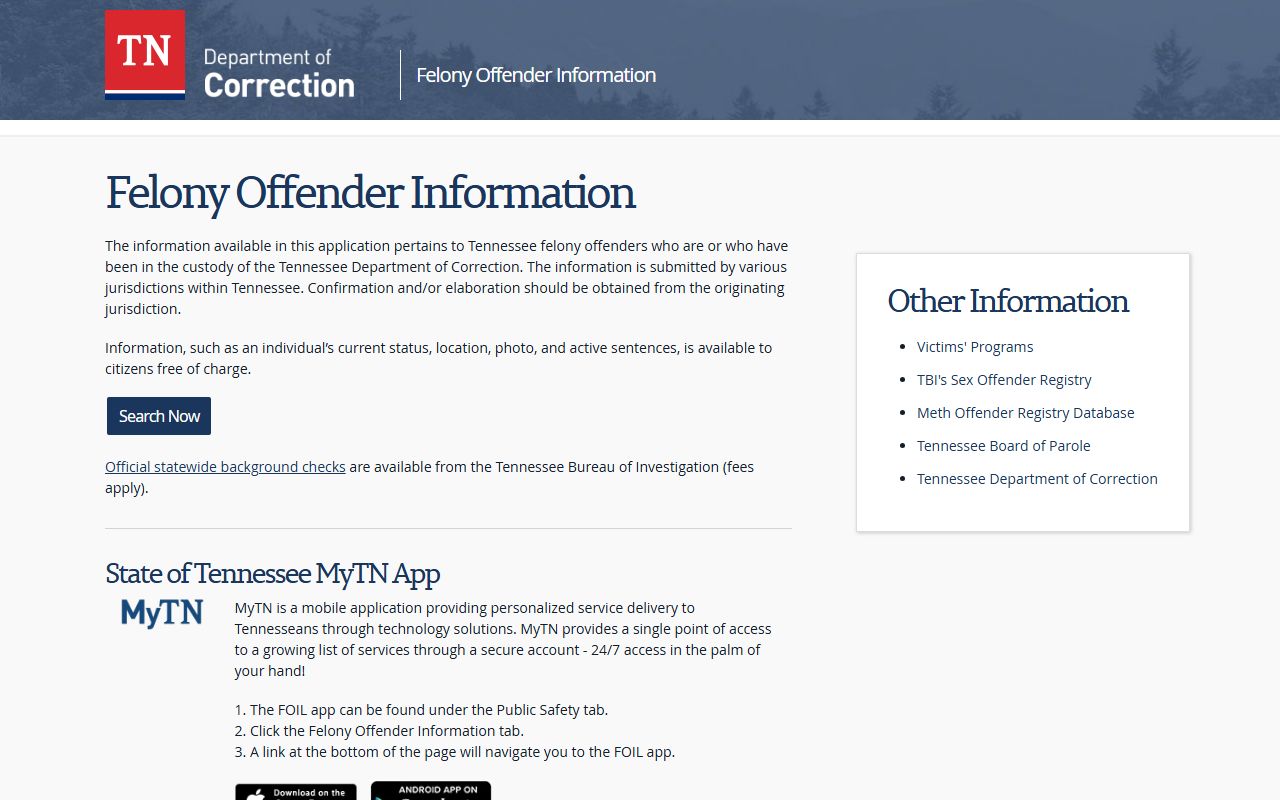
FOIL can confirm state correctional status after conviction, but Grundy County charge status still needs the local court docket or clerk confirmation.
Charges After Arrest Documents
Charges reach the court through a charging document. In a misdemeanor case, the first court paper may be a warrant, citation, or complaint. For a felony, the case may begin with arrest and a preliminary hearing in General Sessions, then proceed by indictment in Circuit Court if the grand jury returns a true bill. The 12th Judicial District Attorney General, Courtney Lynch, is the elected prosecutor for Grundy County and the other counties in the district.
| Document | Who Uses It | What It Means |
|---|---|---|
| Complaint or warrant | Officer, magistrate, or prosecutor | Starts a charge based on probable cause, often in General Sessions. |
| Information | Prosecutor | A formal prosecutor-filed accusation when law allows the charge to proceed without indictment. |
| Indictment | Grand jury | A grand jury's formal charge, often used for felony prosecution in Circuit Court. |
Sealed indictments are not public until the person is arrested or appears. Once the indictment is served, the charge becomes part of the public criminal case file unless a confidentiality rule, seal, juvenile status, or expunction later removes it from public view.
Grundy County Charge Status
Charge status changes as a case moves through court. A charge may start as pending, then be amended to a different offense, reduced in a plea agreement, dismissed by the judge, or dropped by the prosecutor through a nolle prosequi entry. A felony may be transferred from General Sessions to Circuit Court after a preliminary hearing. The status line is often the key field for separating an accusation from the final court result.
| Status | What It Means | Where to Verify |
|---|---|---|
| Pending | The charge is open and no final disposition has been entered. | Docket sheet and next hearing entry. |
| Amended or reduced | The original charge changed to a different count or lower offense. | Motion, plea order, or amended charging entry. |
| Dismissed | The court ended that charge without a conviction. | Disposition entry and signed order. |
| Nolle prosequi | The prosecutor chose not to pursue that charge. | DA entry and court disposition. |
| Bound over | A felony moved from General Sessions toward Circuit Court action. | General Sessions docket and later Circuit filing. |
The bail forfeiture and failure-to-appear statute is relevant when a missed court date produces a bench warrant or bond forfeiture tied to the charge.
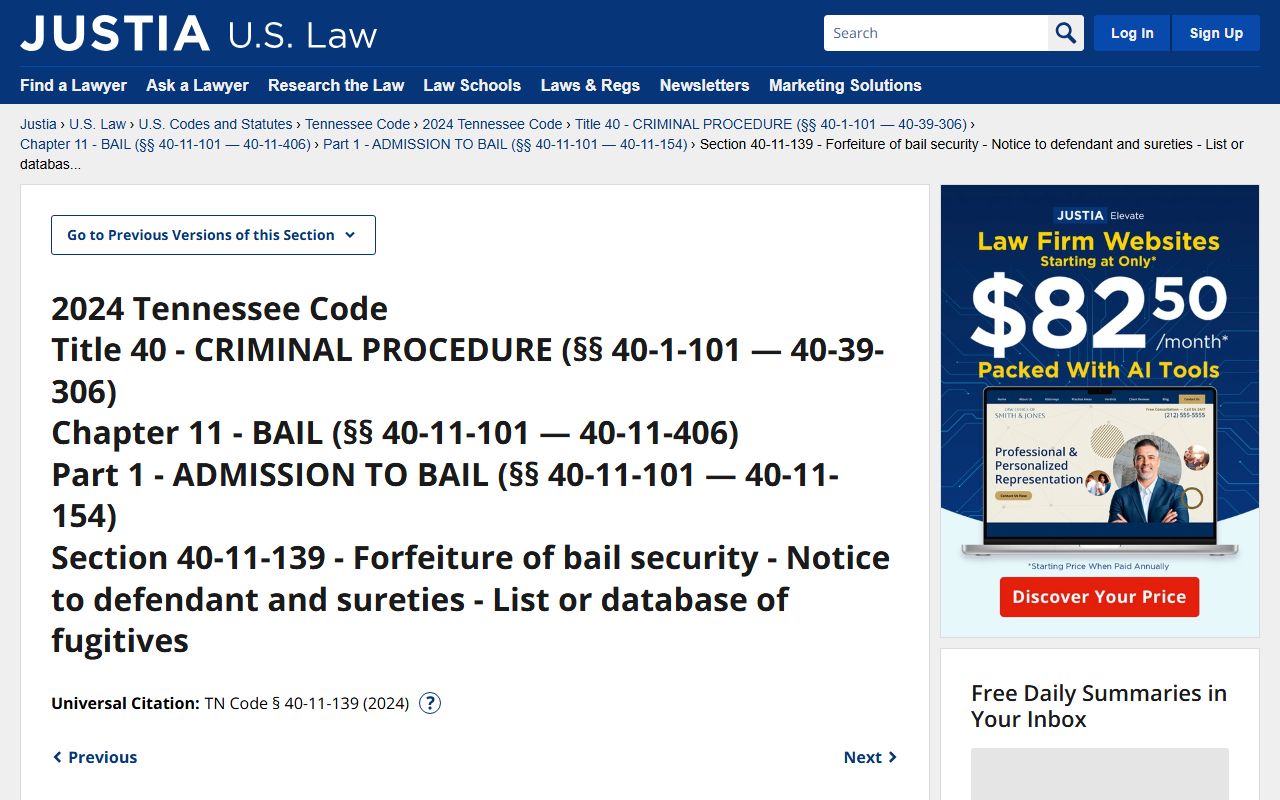
Failure-to-appear entries can affect both charge status and warrant status, so they should be checked against the court docket rather than a single arrest note.
Charge vs Conviction
Arrest records and court charge records are often read too broadly. A charge means the government accused a person of an offense. A conviction means a court entered a judgment of guilt. The same case can contain dismissed counts, amended counts, diversion entries, and one conviction. The final disposition and judgment control the outcome, not the booking label or first charge title.
| Point | Charge | Conviction |
|---|---|---|
| What it is | An accusation filed after arrest or by indictment. | A final finding of guilt by plea or verdict. |
| When it appears | Early in the court case. | At disposition or judgment. |
| Can change | Yes, charges may be added, reduced, or dismissed. | Usually changes only by appeal, correction, or later relief. |
| Record to read | Charging document and docket. | Judgment, sentence, and disposition. |
Federal charges are separate. The U.S. Attorney for the Eastern District of Tennessee handles federal criminal prosecution, and federal case records are not kept by the Grundy County Circuit Court Clerk.
A local arrest may still lead to state charges in Grundy County, while a federal prosecution follows the federal court system and its own docket.
Bond and Warrant Links
Bond information can appear near the charge entry because Tennessee courts set release conditions after arrest. Bond types may include recognizance, cash, surety, property-backed surety, or no-bond hold depending on the charge, warrant, and court order. A missed appearance can lead to a bench warrant, capias, bond forfeiture, or a fugitive listing in available state or federal systems for qualifying felony or violent offense failures to appear.
The Uniform Criminal Extradition Act source is relevant when a charge or warrant involves a person wanted from another state or a person who fled Tennessee after being charged.
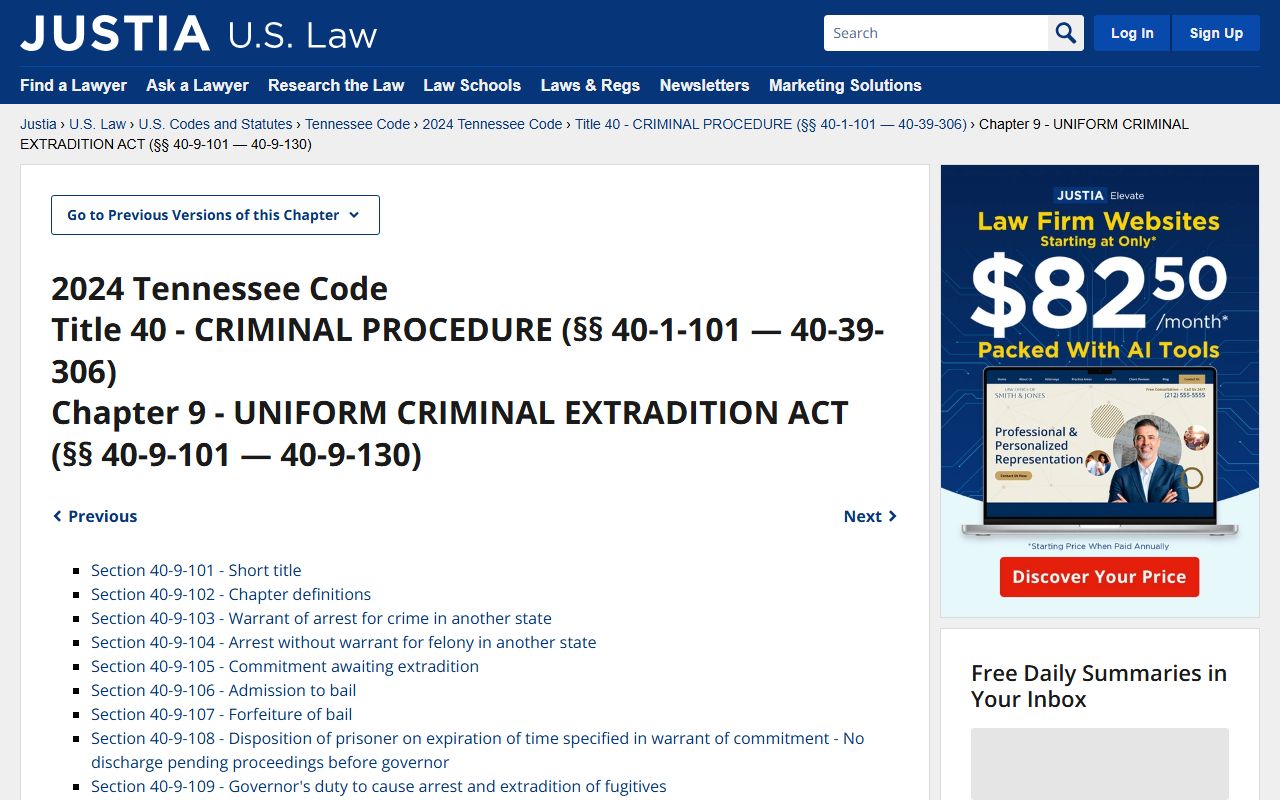
Extradition-related entries should be treated as warrant and custody records as well as court charge records, because the court may need to resolve identity, bond, and transfer issues.
Restricted Grundy County Charge Records
Some charge records are not public. Juvenile delinquency files are confidential under Tennessee law. Search warrants and investigative records may be withheld while an investigation is active or if a court has sealed the record. Adoption and mental-health records are not ordinary criminal charge records, but they show the same access principle: a statutory confidentiality rule can override normal public access.
| Point | Sealed | Expunged |
|---|---|---|
| Public access | Blocked or limited by order or statute. | Removed from public access after qualifying relief. |
| Record status | The record still exists. | The public record is destroyed or removed. |
| Common examples | Juvenile matters, protected victims, sealed warrants. | Dismissed, no true bill, acquitted, diversion, or eligible conviction cases. |
Tennessee expunction can apply to dismissed charges, nolle-prosequied charges, no-true-billed matters, acquittals, judicial diversion dismissals, and certain eligible convictions after the required waiting period. In Grundy County, expunction petitions for local convictions are filed with the Circuit Court Clerk.
State Charge Reference Tools
Some state tools help interpret charge records but do not replace the local court docket. FOIL is for sentenced felony offenders. The TBI sex offender registry is a registry database for qualifying sex offenses, not a full arrest-records search. VINE is a custody-notice system, not a court charge index. The safest method is to use state tools as a cross-check and use the Grundy County court record for the filed charge and outcome.
The Tennessee Sex Offender Registry is useful when a conviction requires registration, but it should not be used to infer that every charge led to a conviction or registry duty.
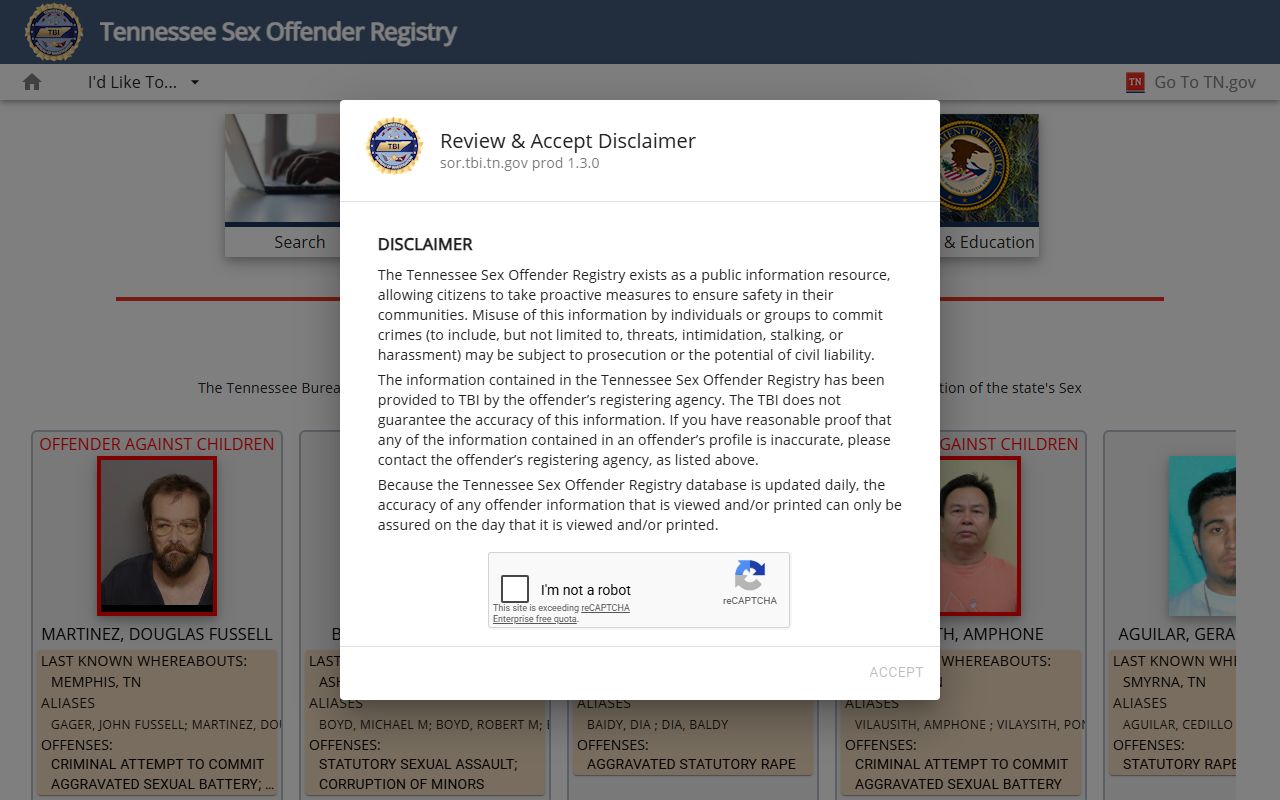
Registry information is downstream from a qualifying case result. Charge records still need to be read from the court file.
Public access: Tennessee public-records access allows inspection of open court records, but the custodian may require proof of Tennessee citizenship and may redact protected data.