
Grundy County Probate Court Office
Probate in Grundy County is confirmed as a Chancery Court function. The records are administered by Clerk and Master Patricia Campbell, Suite 200, 68 Cumberland Street, Altamont, TN 37301. The office phone is (931) 692-3455, and the listed email is patricia.Campbell@tncourts.gov. The county officials page describes the Clerk and Master as handling probate court and delinquent-tax property processing, which matches Tennessee's chancery role in many smaller counties.
That structure matters because Tennessee probate venue varies by county. In Grundy County, a person seeking a will, estate file, small estate affidavit, letters testamentary, conservatorship file, guardianship file, or tax-sale file should start with the Clerk and Master. The Circuit Court Clerk keeps criminal, civil, General Sessions, juvenile, and traffic files. The County Clerk keeps marriage licenses, business licenses, and vehicle records, but no probate case files.
Grundy County Clerk and Master
Clerk and Master: Patricia Campbell
68 Cumberland Street, Suite 200
Altamont, TN 37301
(931) 692-3455
patricia.Campbell@tncourts.gov
Grundy County Probate Terms
Probate records use terms that can be hard to read without context. The same words appear in estate petitions, court orders, letters, inventories, and final settlements. A short definition set helps separate a will case from an estate with no will, and it also helps explain why guardianship and conservatorship records appear in Chancery probate files.
- Testator
- The person who made a will before death.
- Executor
- The person named in a will to handle the estate after the court issues Letters Testamentary.
- Intestate
- A death without a valid will, which usually leads to Letters of Administration instead of Letters Testamentary.
- Guardianship
- A court-supervised arrangement for a minor under age 18.
- Conservatorship
- A court-supervised arrangement for an incapacitated adult, often supported by medical proof.
What Grundy County Probate Covers
Probate covers more than the act of admitting a will. Grundy County Chancery Court probate records may include the original will, petition to open the estate, death certificate reference, bond, oath, letters issued by the court, notice to creditors, inventory, creditor claims, accounting, receipts, releases, orders, and the final settlement. If the decedent had no will, the file may use administration language rather than executor language.
Probate also reaches small estate affidavits, guardianships for minors, conservatorships for incapacitated adults, trusts, muniment of title proceedings, will contests, and safekeeping deposits of wills. A will deposited for safekeeping is not the same as probate. It remains sealed while the testator is living and becomes public only after death when opened under the court process.
Search Grundy County Probate Records
No public online Grundy County probate portal was confirmed in the research. The secure Tennessee County Clerk system is for county clerk functions such as marriage and motor-vehicle work, not for Chancery probate files. Older probate files and will books are described as available through the Clerk and Master back to 1850, with Tennessee State Library and Archives as the genealogy fallback for older microfilmed material.
- Identify the decedent, protected person, or estate name, plus the approximate filing year or date of death if known.
- Call or contact the Clerk and Master to ask whether the file is indexed locally and what copy fees, search fees, or mailing steps apply.
- If requesting by mail, include the case name, estate name, document wanted, return address, payment for copies and certification, and a self-addressed stamped envelope.
- Ask whether the record is open, partly redacted, or restricted because guardianship, conservatorship, and medical material may have confidential parts.
- For very old probate or will records, check TSLA microfilm if the county office cannot locate the paper file or if courthouse fire gaps affect the date range.
Note: Grundy County courthouse fires affected early records, so reconstructed indexes and TSLA microfilm may be essential for old estate research.
Grundy County Small Estate Probate
Tennessee's Small Estate Act can shorten probate when the estate qualifies. The research identifies the small estate threshold as personal property of $50,000 or less, with filing allowed 45 days after death. The court may issue limited letters, which are narrower than full Letters Testamentary or Letters of Administration. Real property issues, debts, disputes, or a need for broader authority can push an estate out of the small-estate path.
The image below comes from Tennessee's Small Estate Act threshold statute.
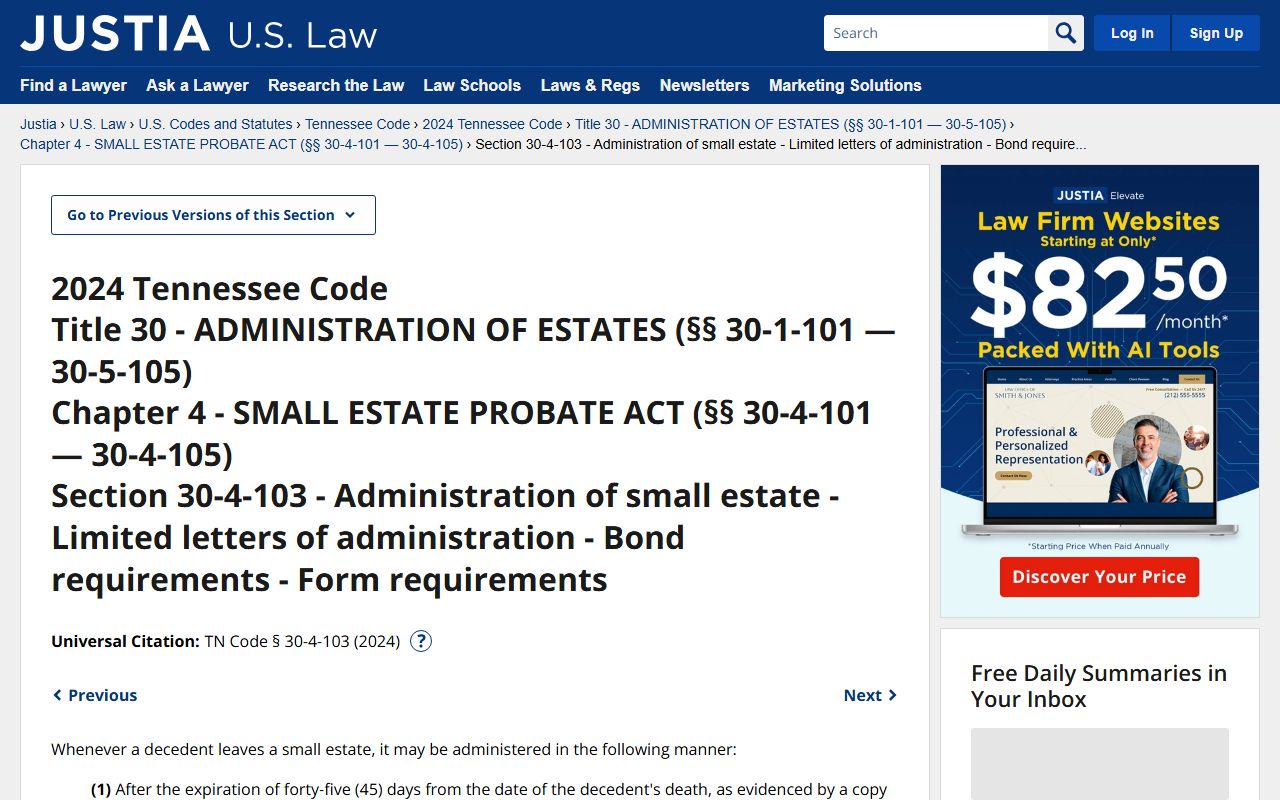
The threshold is a key screening fact before a family spends time preparing a full administration petition.
Grundy County Estate Steps
A standard estate administration in Grundy County begins with a petition in Chancery Court through the Clerk and Master. The original will is filed if one exists, and the court appoints a personal representative. After letters issue, the representative gives notice, manages assets, handles claims, files any required inventory and accounting, distributes property, and seeks closing orders.
- Locate the original will and obtain a certified death certificate.
- File the estate petition with the Clerk and Master in Suite 200.
- Receive Letters Testamentary or Letters of Administration after appointment and oath.
- Publish Notice to Creditors and send actual notice to known creditors.
- File an inventory unless waived, then manage and protect estate assets.
- Wait through the claim period, pay valid claims, and contest improper claims when needed.
- File accounting papers or waiver documents, distribute assets, and request the closing order.
Grundy County Probate Fees
Grundy County did not have a posted itemized probate fee schedule in the research. Tennessee clerk fees are set under T.C.A. section 8-21-401 and related provisions, with probate filing fees, litigation tax, copy charges, certification charges, and publication costs added according to the type of filing. The research flagged typical Tennessee opening costs as roughly $150 to $400 or more depending on case type, but that range is not a Grundy-specific published total.
| Probate item | Amount or rule | Research status |
|---|---|---|
| Opening a probate estate | Statutory filing fees plus taxes and possible publication costs | Exact Grundy total not posted |
| Small estate affidavit | Statutory probate filing costs apply | Confirm with Clerk and Master |
| Plain copies | Up to $0.50 per page in clerk materials | State-level schedule found |
| Certified copy seal | $5 per document | Tennessee statutory clerk fee |
| Indigency request | Uniform Civil Affidavit of Indigency or pauper's oath | Rule 29 process noted |
Grundy County Wills and Deposits
A living testator may deposit a sealed will with the probate court in the county of residence under Tennessee law, but only if the clerk has a secure vault or safe. The research did not confirm whether Grundy's Clerk and Master accepts safekeeping deposits in practice. Deposit is not probate and can be revoked before death. After the testator dies, the will is opened in open session on proof of death and then becomes part of the public probate process.
The image below comes from Tennessee Code section 32-1-112, the will-deposit statute.
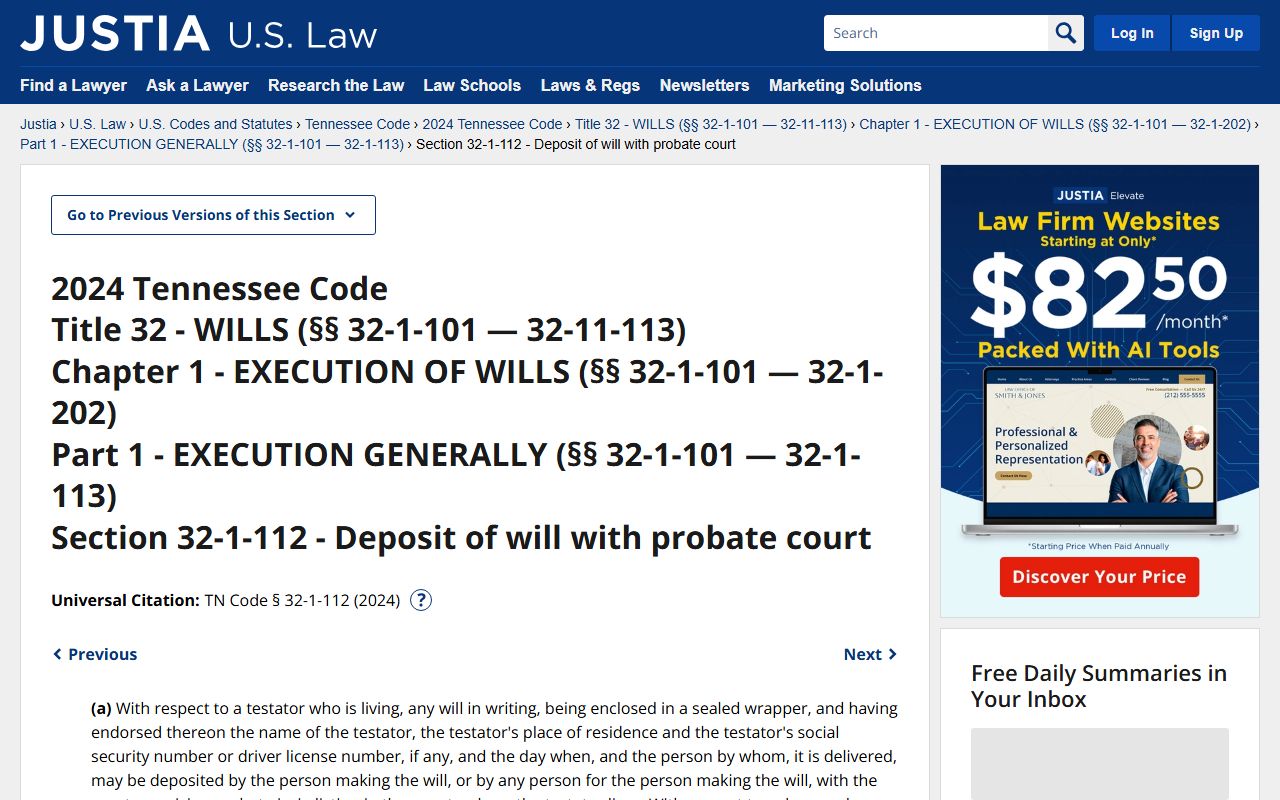
The distinction between safekeeping and probate helps explain why a will may exist at the court before an estate case has opened.
Grundy County Probate Limits
Notice to Creditors starts a key timeline in Tennessee probate. Creditors generally have four months from first publication to file claims, and claims are barred no later than 12 months from the date of death. Parties may object to claims after the four-month period. A full administration often takes six to twelve months, and contested estates, tax issues, real-property sales, or creditor disputes can extend that timeline.
Probate filings are generally public after they are opened, but access is not absolute. Deposited wills are sealed until death. Conservatorship and guardianship files may include medical or capacity evidence that is restricted. The Clerk and Master can explain whether a specific estate file is fully open, partly redacted, or available only by court order.