
Grundy County Criminal Records
A Grundy County criminal court record is the case-level file maintained by the Circuit Court Clerk after criminal charges are filed in court. The record is not just an arrest note. It is the formal court history of the prosecution, including the charging instrument, docket entries, pleas, motions, orders, judgment, sentence, and any later bond forfeiture or probation-related filing that becomes part of the case file. The Circuit Court Clerk, Penny Sons, keeps Circuit, General Sessions, and juvenile court records from Suite 206 at the Grundy County courthouse in Altamont.
General Sessions Court handles misdemeanors, traffic misdemeanors, preliminary felony hearings, warrants, and orders of protection. Felony cases that continue beyond the preliminary stage move to Circuit Court in the 12th Judicial District, where Grundy County shares trial-court service with Bledsoe, Franklin, Marion, Rhea, and Sequatchie counties. Circuit Court has general criminal jurisdiction and no civil dollar cap. Juvenile delinquency cases are handled under the General Sessions judge acting as juvenile judge, but juvenile files are confidential and are not part of the open criminal court record.
The closer look at Grundy County arrest records and court charges is useful when the question is what was filed after an arrest. The criminal court record is broader. It follows the case through plea, trial, dismissal, conviction, sentence, or expunction.
Search Grundy County Criminal Records
Grundy County uses the Grundy County Online Court Records System, a TNCrtInfo portal for local court records. The research found that the platform covers Circuit and General Sessions cases, typically including criminal, traffic, and civil matters. Grundy's exact free-versus-subscription access and start dates were not published, but the portal displays Search, Contact, and Subscription Login links. The statewide multi-county TNCrtInfo entry point at search.tncrtinfo.com can be useful when a user needs to search more than one available Tennessee court office.
- Open the Grundy County Online Court Records System and choose the search function.
- Search by defendant name or case number when the court case number is known.
- Narrow by court type, case type, and date range if the portal displays those fields.
- Open the case result and read the docket entries from filing through disposition.
- Call the Circuit Court Clerk at 931-692-3368 for certified copies or older paper files.
Automated research could not inspect the live ASP.NET search form because the search path requires browser-side postback behavior. For that reason, exact field labels and dropdown choices should be verified in a live browser or by calling the clerk. For appellate criminal cases, the Tennessee Public Case History database covers Tennessee Supreme Court, Court of Appeals, and Court of Criminal Appeals dockets, not trial-level Grundy cases.
Grundy County Criminal Case Flow
Criminal court records are easiest to read when the case is followed in time order. A local misdemeanor may begin in General Sessions with a warrant or citation, then move through arraignment, plea settings, motions, and disposition. A felony usually starts with arrest or warrant activity, receives an initial appearance and preliminary hearing in General Sessions, and may be bound over to Circuit Court. The District Attorney General for the 12th Judicial District, Courtney Lynch, prosecutes criminal matters across the six-county district.
Case flow: Charges Filed › Arraignment › Pretrial and Motions › Plea or Trial › Disposition › Sentencing
| Stage | What the Record Shows |
|---|---|
| Charges Filed | The complaint, warrant, information, or indictment starts the court case and lists each alleged offense. |
| Arraignment | The defendant is formally advised of the charge and enters an initial plea. |
| Pretrial and Motions | The docket may show discovery disputes, suppression motions, continuances, bond changes, or competency issues. |
| Plea or Trial | The court records whether the case ended by negotiated plea, bench trial, jury verdict, dismissal, or acquittal. |
| Sentencing | The judgment lists the sentence, probation terms, fines, costs, restitution, jail credit, and appeal deadlines. |
The Tennessee recovery court program source documents treatment courts as a statewide criminal-justice service. Grundy County participates in a district-wide recovery court model, so diversion or treatment-court entries may appear when a case is routed into a specialty program instead of moving straight to ordinary sentencing.
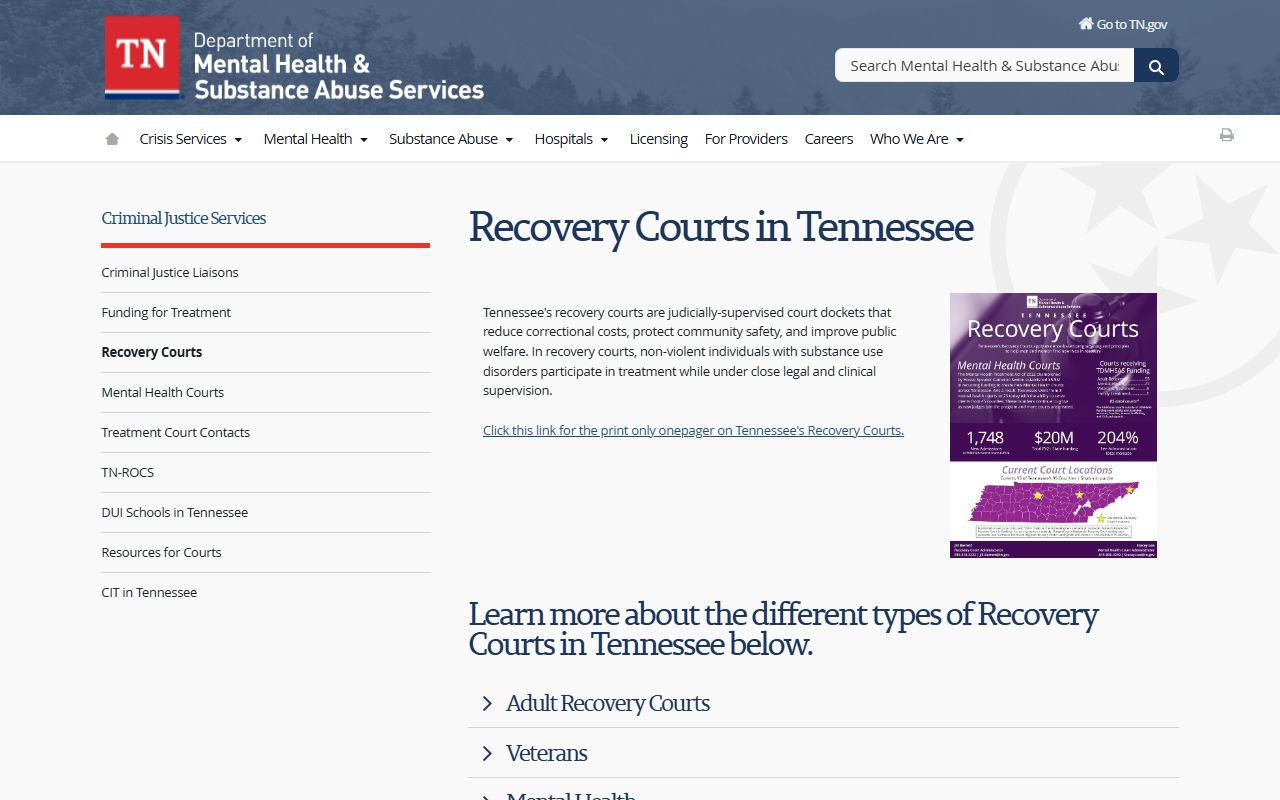
Recovery court material matters because a criminal record may show supervision, treatment, review hearings, and later dismissal or sentencing depending on the program path.
Grundy County Criminal Record Fields
A criminal court record should be read from the header down through the docket. The header identifies the court, case number, judge, case type, filing date, and status. The party section lists the State of Tennessee as prosecutor and the defendant as the charged party. Attorney fields may include the District Attorney General, assistant district attorneys, retained counsel, or appointed counsel such as the 12th Judicial District Public Defender when appointment is approved.
| Field | What It Shows |
|---|---|
| Case number | The locally assigned docket number, often tied to filing year, case type, and sequence. |
| Court and judge | General Sessions, Circuit Court, or another court handling the criminal event. |
| Defendant and counsel | The accused person, attorney of record, and prosecutor information. |
| Charges and statutes | Each alleged offense, severity, statute reference, and any amended or dismissed count. |
| Docket entries | Chronological filings, hearings, motions, orders, continuances, pleas, and trial events. |
| Disposition | The outcome, such as guilty plea, verdict, dismissal, nolle prosequi, acquittal, or diversion dismissal. |
| Sentence and money | Jail, probation, fines, costs, restitution, bond, and other financial terms. |
Common Tennessee abbreviations may include DISP for disposed, NP for nolle prosequi, CONT for continuance, BW for bench warrant, FTA for failure to appear, SENT for sentenced, and PROB for probation. Grundy's exact docket-code legend was not published online, so unusual codes should be checked with the Circuit Court Clerk before relying on them.
Criminal Charges vs Convictions
A Grundy County criminal case can list charges that never became convictions. A charge is an accusation filed by law enforcement, a prosecutor, or a grand jury process. A conviction is the court result after a guilty plea, verdict, or other judgment of guilt. One arrest may produce several counts, and each count can have its own status. Some may be reduced, dismissed, merged, or resolved through diversion while another count results in a conviction.
| Point | Charge | Conviction |
|---|---|---|
| Meaning | An allegation that an offense was committed. | A court judgment of guilt by plea or verdict. |
| Proof level | Usually tied to probable cause or grand jury action. | Requires proof beyond a reasonable doubt or a valid guilty plea. |
| Record status | May remain visible unless dismissed and expunged. | Remains visible unless eligible for expunction or other restriction. |
| Where to verify | Charging document and docket entries. | Judgment, disposition, and sentencing entries. |
The judicial diversion statute is important because a qualified defendant may complete probation, receive dismissal, and then seek expunction. The record can look active or unresolved until the final discharge, dismissal, and expunction steps have actually been entered.
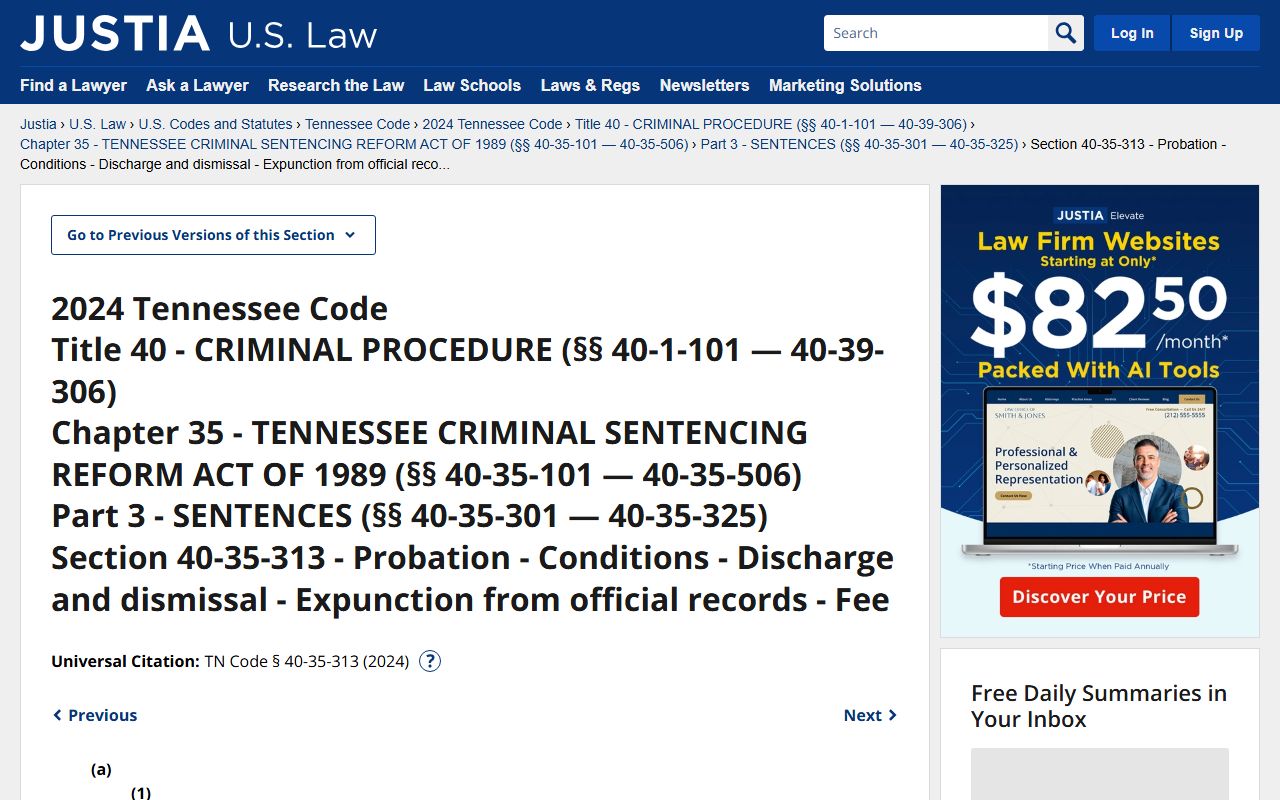
Diversion entries should be read with care because the charge, supervision terms, and final case result may be separated by months or years on the docket.
Access to Grundy County Criminal Records
Tennessee court records are presumptively open under the Tennessee Public Records Act and the Tennessee Supreme Court public-access framework. For Grundy County, practical access runs through the Circuit Court Clerk for Circuit, General Sessions, and juvenile court records. Requests can be made in person, by phone, by mail to P.O. Box 161, Altamont, TN 37301, or by email at penny.sons@tncourts.gov when the record is held by that office. Inspection is generally free, while copies and certified copies may carry clerk fees.
Access rule: T.C.A. § 10-7-503 requires prompt access for Tennessee citizens, with a response due within seven business days if the record is not produced right away.
Court rule: Tennessee Supreme Court Rule 34 treats court records as open unless a statute, rule, or court order restricts access.
Older criminal case files may not be online. The research notes that TNCrtInfo sister-county coverage often starts around 1999 for criminal and traffic cases, but Grundy's exact date range was not published. For older files, contact the clerk with the defendant name, approximate year, case number if known, and a clear description of the requested record.
Sealed and Expunged Criminal Records
Tennessee distinguishes a sealed record from an expunged record. A sealed criminal record still exists, but public access is restricted by rule, statute, or court order. An expunged criminal record is destroyed or removed from public systems and treated as if the arrest or charge did not occur, subject to limited nonpublic court and law-enforcement retention for statutory purposes.
| Point | Sealed | Expunged |
|---|---|---|
| Public view | Hidden or limited by court order or law. | Removed from public criminal record access. |
| Record existence | The file remains in court custody. | The public record is destroyed or removed. |
| Typical basis | Confidential category, protective order, juvenile matter, or court finding. | Dismissal, nolle prosequi, no true bill, acquittal, diversion, or eligible conviction. |
| Where filed | Handled through the court with custody of the file. | Filed with the Circuit Court Clerk in the county of conviction. |
The research identifies Tennessee treatment court contacts as another source tied to criminal case outcomes and supervised programs. Those entries can matter when a charge is held open while the defendant works toward dismissal, compliance, or sentencing.
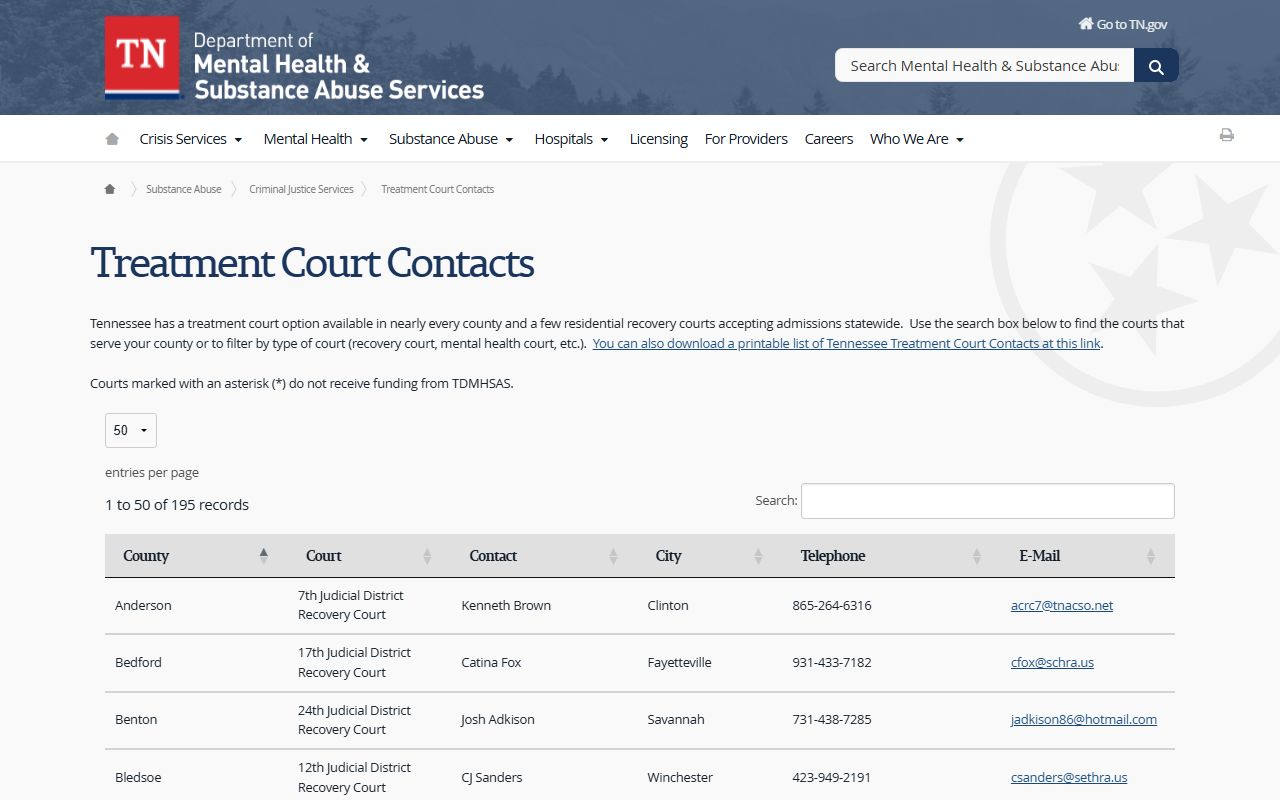
Treatment court and expunction outcomes should be verified from the final docket entry, not from the first charge line alone.
Juvenile court files are confidential under Tennessee law. Adoption, mental-health, and records with protected personal data also have restricted access rules. Public copies may redact Social Security numbers, financial account numbers, minor names, and protected addresses without sealing the entire case.