
Grundy County Warrant Search Limits
The research did not confirm an official online active-warrant list for Grundy County. The Sheriff's Office website at gc-sheriff.com could not be reached during research, and the county government site does not publish a warrant list. Unofficial jail and warrant sites should not be treated as sources for an active warrant. For a real check, use the Sheriff's Office, the Circuit Court Clerk, or an attorney.
Grundy County Sheriff Heath Gunter's office is the local law-enforcement contact for active warrant questions. The verified Sheriff's Office address is 227 Maple Street, P.O. Box 218, Altamont, TN 37301, and the main phone is 931-692-3466. Court bench warrants and capias entries are checked through the Circuit Court Clerk, Penny Sons, at 931-692-3368, with a docket line listed in the research as 931-692-2414.
| Fallback Step | Use This Channel | Best For |
|---|---|---|
| 1 | Sheriff's Office, 931-692-3466 | Active arrest warrants, served warrants, surrender questions, and law-enforcement records. |
| 2 | Circuit Court Clerk, 931-692-3368 | Bench warrants, capias entries, missed court dates, and warrant clearance on a docket. |
| 3 | Attorney inquiry | Checking warrant status without exposing the subject to immediate arrest at the counter. |
| 4 | TPRA request | Written records when disclosure is allowed and the record is not restricted or investigative. |
Grundy County Warrant Types
Tennessee warrant language can be confusing because civil, criminal, and court-enforcement documents use similar terms. In Grundy County, General Sessions Court handles misdemeanors, preliminary felony hearings, warrants, and many failure-to-appear matters. Circuit Court handles felony criminal cases and can issue court orders that lead to arrest when a defendant fails to appear or violates a court command.
| Type | Issued By | Purpose |
|---|---|---|
| Arrest warrant | Judge or magistrate | Authorizes arrest based on probable cause that a person committed an offense. |
| Bench warrant | Judge | Orders arrest for missed court, contempt, failure to comply, or similar court issues. |
| Capias | Court or clerk process | Brings a person before the court, often after failure to appear. |
| Search warrant | Judge or magistrate | Authorizes a search for evidence at a place, device, vehicle, or person. |
| Fugitive warrant | Judge or magistrate | Holds a person wanted by another state or jurisdiction. |
| Civil warrant | General Sessions clerk | Starts a Tennessee General Sessions civil case and is not a criminal arrest warrant. |
The General Sessions jurisdiction statute helps explain why some Grundy County warrant issues begin in General Sessions rather than Circuit Court.
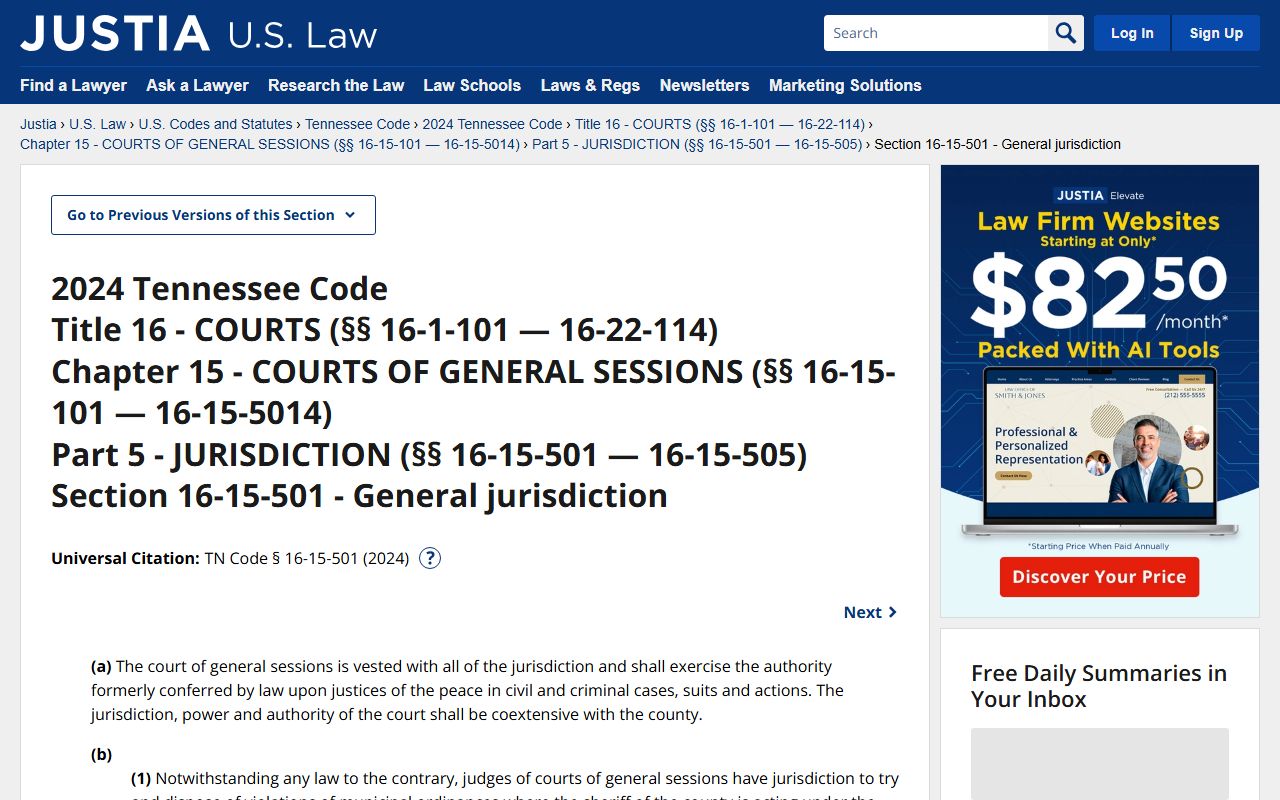
That jurisdiction split matters because the right office depends on whether the warrant is tied to a misdemeanor, preliminary felony hearing, civil warrant, or later Circuit Court case.
Grundy County Warrant App Caveat
The Grundy County Sheriff's Office mobile app exists, but the research found no app-only warrant search, most-wanted list, inmate lookup, records-request tool, or crime map. The store descriptions describe reporting crimes, submitting tips, interactive features, and public-safety news. The app should not be presented as a warrant database. For warrant status, call the Sheriff's Office or the court clerk instead.
The Grundy County Sheriff's Office App Store listing documents the iOS app and its public-safety function.
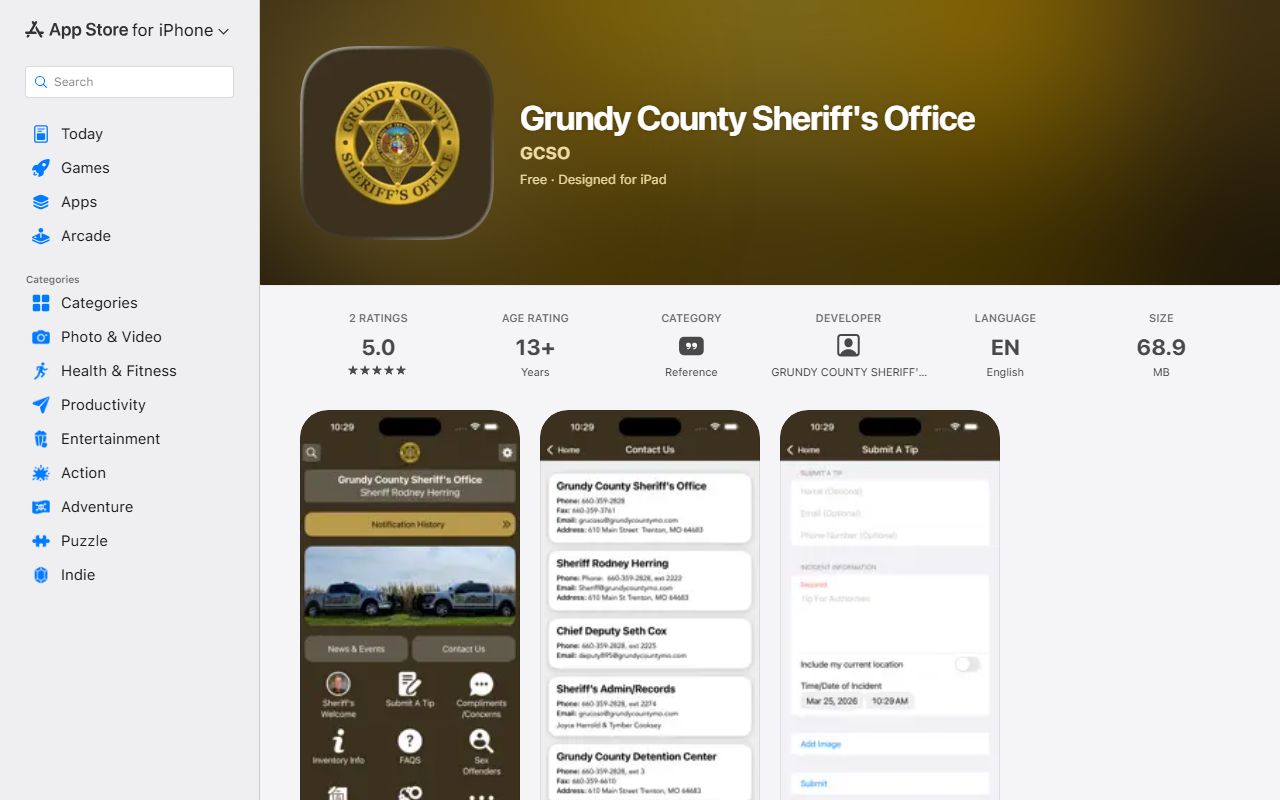
The Apple listing supports the app caveat: the app may be useful for tips or updates, but it is not confirmed as a warrant lookup tool.
The Grundy County Sheriff's Office Google Play listing is the Android source for the same app.
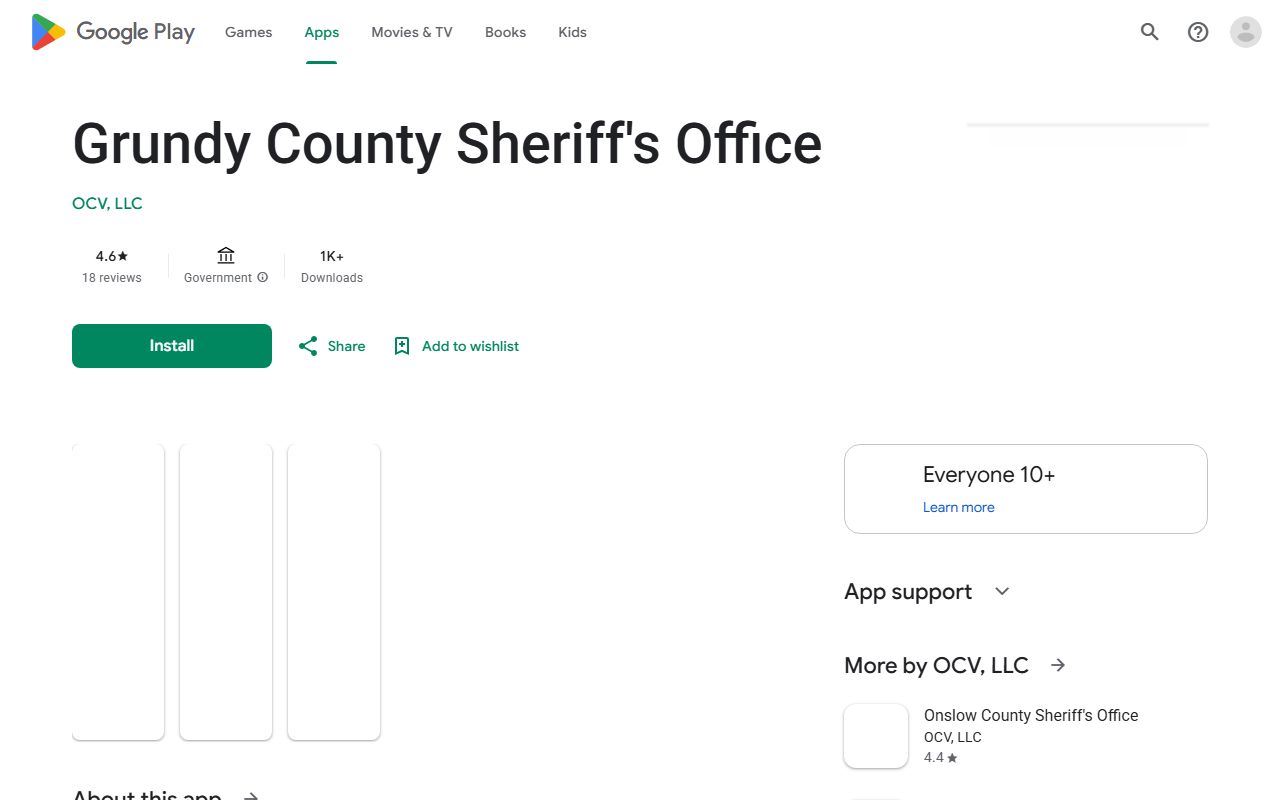
Both app listings reinforce the same practical point: use the app for sheriff news and tips, not as proof that a warrant does or does not exist.
Grundy County Warrant Record Fields
No confirmed public online warrant search field table was available for Grundy County because no official warrant database was verified. A court or sheriff warrant record, when disclosed, usually has enough fields to identify the subject, issuing authority, charge, and current warrant status. Some fields may be withheld if the warrant is sealed, unserved, juvenile, or investigative.
| Field | What It Shows |
|---|---|
| Subject name and aliases | The person named in the warrant, with alternate names if recorded. |
| Date of birth or description | Identifiers used to reduce mistaken identity. |
| Issuing court or judge | The court, magistrate, or judge that issued the warrant. |
| Issue date | When the warrant was signed or entered. |
| Charge or reason | The alleged offense, failure to appear, contempt, or extradition basis. |
| Bond amount | Any preset bond or hold condition listed with the warrant. |
| Status | Active, served, recalled, quashed, or cleared if the agency discloses it. |
For case-linked bench warrants, the docket may also show related entries such as FTA, bond forfeiture, capias pro fine, reset hearing, or recall order. A cleared warrant should be confirmed through the clerk after the judge recalls it or the sheriff serves it.
Resolve a Grundy County Warrant
An outstanding warrant generally remains active until it is served, recalled, quashed, or otherwise cleared by the issuing court. Waiting does not make a Tennessee warrant expire. A person who may have an active warrant should identify the warrant type before going to court or the Sheriff's Office. Bench warrants for missed court or failure to pay often have a different path than felony arrest warrants or out-of-state fugitive warrants.
- Confirm the warrant with the Sheriff's Office, the Circuit Court Clerk, or counsel.
- Ask whether the warrant is for arrest, bench warrant, capias, capias pro fine, or fugitive status.
- Check whether a preset bond exists or whether a magistrate must set bond after surrender.
- For missed court, ask counsel about a motion to recall or reset the case.
- Appear for all new court dates after the warrant is served or recalled.
Important: A voluntary surrender is usually easier to plan than an arrest during a traffic stop, but legal counsel should review the warrant first.
Bond and Fugitive Warrants
Bond on a warrant may be cash, surety, recognizance, property-backed, or held for a judicial review. A preset bond allows a defendant or bondsman to act more quickly. If no bond is set, the person may wait for an initial appearance or magistrate review. Failure to appear can also trigger bond forfeiture against a surety. In felony or certain violent-offense FTA cases, Tennessee law can require placement on available state or federal fugitive lists.
The Tennessee correction victim services and SAVIN source connects warrant and custody events to victim notification after a person is in custody or correctional status.
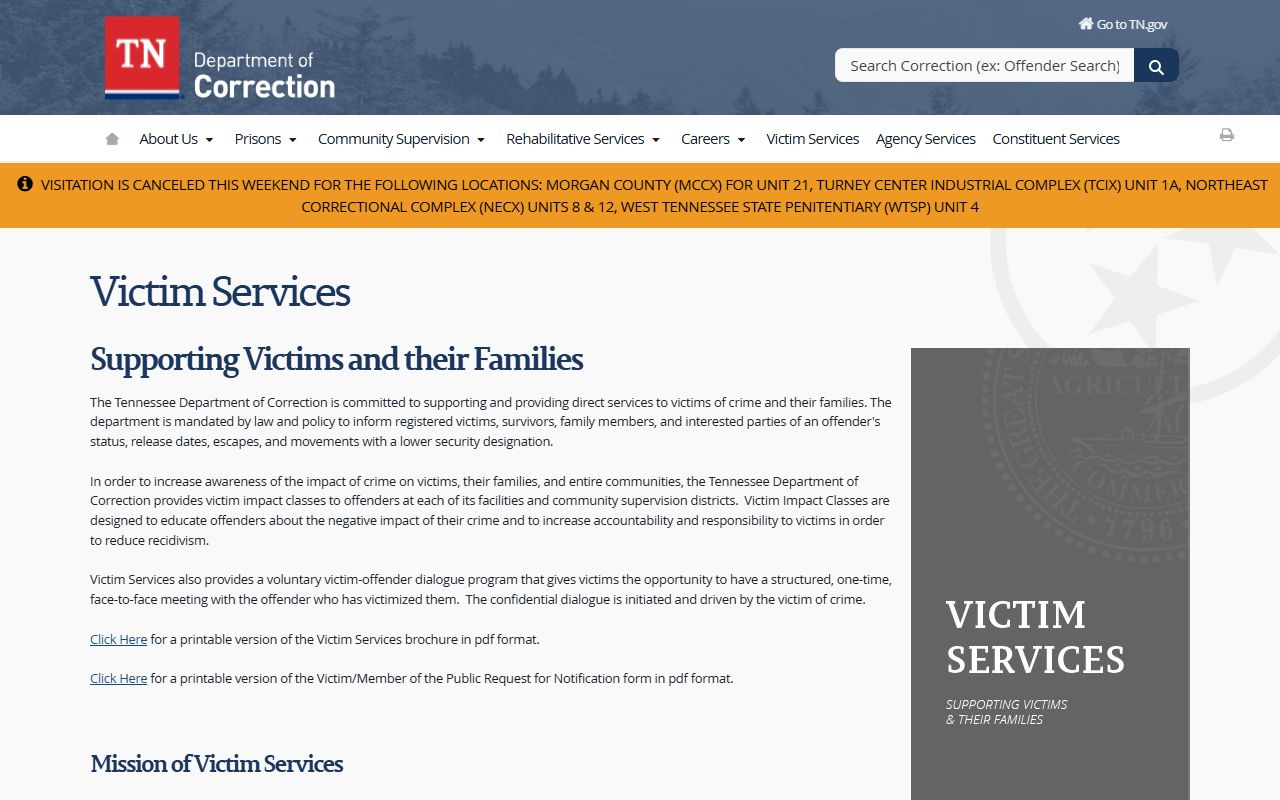
SAVIN and victim-notice tools are not active warrant databases, but they may help victims monitor custody changes after a warrant is served.
Out-of-state warrants follow Tennessee's extradition framework. A person arrested in Grundy County on a fugitive warrant may waive or contest extradition. A person wanted by Tennessee from another state may be returned through a governor's demand and court process.
Warrant Records and Retention
Some warrant papers become part of the criminal case file. The CTAS retention schedule identifies permanent retention for original process and criminal case papers, while specific warrant categories may have defined periods. Unserved misdemeanor warrants and DUI detainer warrants have different retention treatment in the research. The practical result is that a warrant may appear in the case file, in clerk records, in sheriff records, or in more than one place.
The CTAS circuit and criminal records retention schedule is the source for the court-record retention framework.
Retention rules explain why older warrant-related papers may need a clerk request rather than an online search.
Restricted Grundy County Warrants
Not every warrant record is public. Sealed search warrants, investigative warrant materials, and juvenile warrants may be withheld. Law-enforcement exemptions can also limit access while a case is active or while disclosure would compromise service, safety, or an investigation. A public-records request can still be made, but the custodian must cite the legal basis for any denial.
Most-wanted information for Grundy County was not confirmed on a dedicated local Crime Stoppers site. The Sheriff's Office maintains public social-media activity, and the Tennessee Bureau of Investigation maintains statewide wanted-person information, but neither replaces a direct warrant check with GCSO or the Circuit Court Clerk.
Driving or living with an active warrant creates arrest risk during any police contact. For traffic-related failures to appear, Tennessee driver's-license consequences may also follow through the Department of Safety process. The court docket and clerk confirmation are the best way to verify that a recalled or served warrant has been cleared.